Zero Waste Kitchen on a Budget: 9 Simple Swaps That Actually Save Money
You don’t need a Pinterest‑perfect kitchen or expensive gadgets to go zero waste. These 9 budget‑friendly swaps cut plastic, reduce food waste, and stretch your grocery bill.
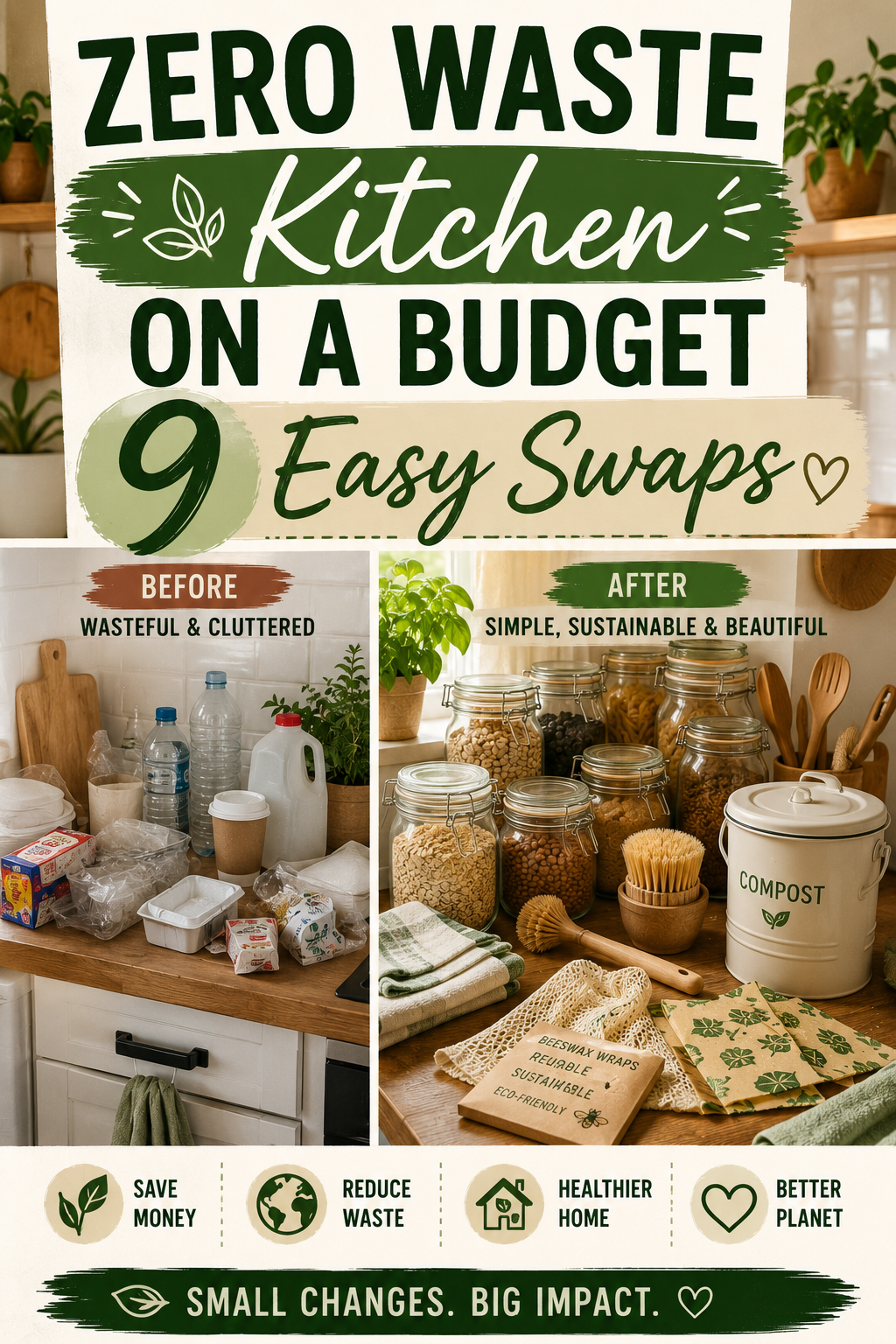
You don’t need a Pinterest‑perfect kitchen, expensive “eco” gadgets, or a full remodel to go zero waste. Most impact comes from a handful of habits and small swaps that cut plastic, reduce food waste, and stretch your grocery budget.
Below are 9 budget‑friendly zero‑waste swaps designed for small apartments and renters. Pick 1–2 to start this week and layer from there.
1. Bottled Drinks → Tap, Filter, and a Reusable Bottle
Single‑use plastic bottles are one of the biggest sources of kitchen waste and recurring cost.
Do instead:
- Use tap water plus a simple pitcher filter or faucet filter if needed.
- Keep one reusable bottle and one to‑go mug near the sink so they’re easy to grab.
- Make iced tea, cold brew, or infused water in a glass jar instead of buying canned or bottled drinks.
This swap cuts plastic dramatically and pays for itself quickly if you currently buy packaged drinks every week.
2. Paper Towels → Cloth Rags & Reusable Towels
Most “messy kitchen” tasks don’t need paper at all—just something absorbent you can wash and reuse.
Try this:
- Cut old T‑shirts into squares for cleaning rags.
- Keep a small basket or jar of cloth napkins or microfiber cloths on the counter so they’re as easy to grab as a paper towel roll.
- Reserve paper towels (if you still buy them) for truly gross messes only.
You’ll take out the trash less often, and a single pack of cloths can last for years.
3. Plastic Wrap & Zip Bags → Beeswax Wraps, Containers, and Silicone Bags
Cling film and disposable bags are convenient, but they generate a lot of plastic waste for very short use.
Swap options:
- Cover bowls with plates, beeswax wraps, or reusable bowl covers instead of plastic wrap.
- Store leftovers in glass jars or containers you already own (pasta sauce jars, takeout glass containers, etc.).
- Use a small set of silicone freezer bags for things like frozen fruit, chopped veggies, or bread.
Start with what you have (jars, old containers) and upgrade slowly so you stay under budget.
4. Pre‑Portioned Snacks → Bulk Bins + Jar Storage
Individually wrapped snacks create mountains of plastic and cardboard, and you pay extra for the packaging.
Budget zero‑waste approach:
- Buy snacks like nuts, dried fruit, granola, or crackers in larger bags or bulk bins when possible.
- Decant into glass jars or small containers at home for a pantry that looks organized and makes portioning easy.
- Pack your own “snack boxes” in reusable containers for work or outings instead of single‑serve packets.
This reduces waste and lets you see exactly what you have so snacks don’t go stale in the back of a cabinet.
5. “Random Leftovers” → Meal Planning & an “Eat Me First” Box
Food waste is one of the most expensive kinds of waste—especially in small fridges where items get hidden fast.
Shift the system:
- Add a simple meal plan for 3–5 core meals per week, reusing ingredients across dishes (for example, rice + beans show up twice).
- Designate one shelf or bin in your fridge as “Eat Me First” for leftovers and foods that are close to expiring.
- Plan one “leftover night” or “soup/stir‑fry night” each week to use up odds and ends.
These small habits are proven to cut household food waste significantly, which directly lowers grocery costs.
6. One Big Trash Can → Trash + Countertop Compost
If everything goes into one trash bag, you’re throwing away a lot of potential compost and recyclable material.
Budget‑friendly upgrade:
- Add a small countertop compost container (or even a repurposed lidded jar) for veggie scraps, coffee grounds, and eggshells.
- Look up local options: community gardens, farmers’ markets, or municipal programs that accept food scraps.
- Keep a separate bin or bag for recyclables to keep them out of your regular trash.
You’ll see your trash volume drop quickly, even in a tiny apartment kitchen.
7. Cardboard Chaos → Clear Jars & Simple Pantry Zones
Messy pantries cause waste because food gets lost, expires, and gets purchased twice.
Zero‑waste pantry basics for small spaces:
- Declutter: pull everything out, toss expired items, and donate unopened foods you won’t eat.
- Create a few simple zones—breakfast, grains, snacks, baking, dinner basics—rather than overly complicated systems.
- Move dry goods (rice, pasta, lentils, oats, snacks) into clear jars or stackable containers so you can see what you have at a glance.
- Label jars with the food name and cooking instructions if you need them.
This approach works even for a single cabinet pantry and is one of the most recommended small‑pantry strategies right now.
8. “Single‑Use Everything” → Reusable Kitchen Workhorses
Many zero‑waste creators emphasize choosing a few high‑impact reusables you’ll actually use daily instead of buying every new eco gadget.
Consider focusing your budget on:
- A sturdy dish brush with replaceable heads and a compostable sponge.
- A set of baking mats so you don’t need parchment paper for most oven use.
- One good chef’s knife and cutting board, instead of lots of specialty tools you rarely touch.
Each of these replaces a long list of disposables over time, which is why experienced zero‑waste kitchen folks recommend them.
9. Energy Hogs → Small Efficiency Tweaks
A zero‑waste kitchen is also about using less energy, which saves money and emissions.
Easy, renter‑friendly changes:
- Swap your most‑used kitchen bulb for an LED bulb—they use less electricity and last much longer.
- When boiling water or cooking, use a lid and match pot size to burner so heat doesn’t escape.
- Let hot food cool slightly before putting it in the fridge so it doesn’t make the appliance work as hard.
Energy‑efficiency guides highlight these as quick wins that don’t require buying new appliances.
How to Start if You’re on a Tight Budget
If money is really tight, start with the swaps that cost almost nothing:
- Do a waste audit and set up an “Eat Me First” shelf.
- Switch to rags and cloths made from old clothes.
- Declutter and re‑zone your pantry using jars and containers you already own.
- Keep a small compost jar and look for a free drop‑off option.
As you see savings on groceries and disposables, you can reinvest a bit into higher‑quality reusables like silicone bags, beeswax wraps, and a better dish brush.